How to Achieve a Consistent Spray Finish Every Time

Achieving a consistent spray finish isn’t just about appearance – it directly affects coating performance, material usage, and long-term durability. Inconsistent finishes can lead to rework, wasted product, and delays. For contractors and production teams, that quickly impacts both time and cost.
Most spray issues, however, come down to a small number of controllable factors. When setup, technique and environment are aligned, consistency becomes far more achievable. This guide outlines the most common causes of inconsistent finishes and the practical adjustments that improve results.
Why consistency matters
A consistent spray finish ensures:
- Even coating thickness across the surface
- Reliable adhesion and curing
- Reduced risk of defects such as runs, dry spray or pinholes
- Lower material waste and overspray
- Fewer touch-ups and rework
Ultimately, it leads to a more reliable and repeatable process.
Common causes of inconsistent spray finishes
1. Pressure variations
Unstable or incorrect pressure is one of the most common issues.
If pressure is too high:
- Excessive overspray
- Increased bounce-back
- Material waste
If pressure is too low:
- Poor atomisation
- Uneven coverage
- Patchy finish
Industry guidance consistently highlights pressure control as critical to achieving a uniform coating, with incorrect settings often leading to splatter or inconsistent texture.
What to check:
- Compressor output and capacity
- Pressure regulator settings
- Hose condition and length
- Air supply consistency
Even small fluctuations can affect atomisation and overall finish quality.
2. Incorrect nozzle or tip selection
The nozzle directly controls material flow rate and spray pattern.
Using the wrong size or type can result in:
- Uneven spray patterns
- Inconsistent film build
- Poor transfer efficiency
Nozzle or tip selection should always match:
- Coating type and viscosity
- Required film thickness
- Surface size and geometry
Guidance from spray equipment manufacturers highlights that nozzle and tip size influences both output and pattern width, meaning incorrect selection can quickly lead to uneven application.
A worn nozzle or tip will also distort the spray pattern, so regular inspection and replacement is essential.
3. Poor surface preparation
Surface preparation sets the foundation for a consistent finish.
Contaminants such as dust, grease or moisture can cause:
- Adhesion failure
- Fish eyes or surface defects
- Uneven coating build
Best practice includes:
- Thorough cleaning and degreasing
- Achieving the correct surface profile
- Ensuring surfaces are dry and contaminant-free
Even with the correct spray setup, poor preparation will compromise the final result. Industry guidance consistently reinforces that finish quality is determined as much before spraying as during application.
4. Environmental conditions
Environmental factors have a significant impact on coating behaviour.
Key risks include:
- High humidity introducing moisture contamination
- Low temperatures affecting viscosity and curing
- Poor airflow leading to overspray build-up
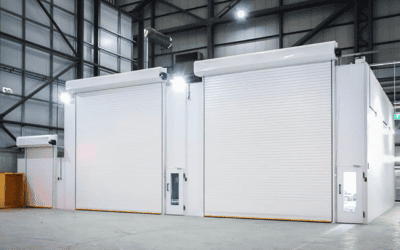
Controlled environments improve coating levelling, drying and overall finish quality. Clean, well-ventilated conditions also reduce the risk of airborne contamination affecting the surface.
What to monitor:
- Ambient temperature
- Relative humidity
- Ventilation and extraction
5. Inconsistent spray technique
Operator technique plays a critical role in achieving a consistent spray finish.
Common issues include:
- Uneven spray distance
- Incorrect gun angle
- Inconsistent stroke speed
- Poor overlap between passes
Best practice includes:
- Keeping the gun perpendicular to the surface
- Maintaining a consistent spray distance
- Using smooth, controlled passes
- Overlapping each pass by approximately 50% to ensure even coverage
Industry spray technique guidance consistently highlights that inconsistent movement is one of the primary causes of striping, uneven build and visible defects. Consistency in movement leads directly to consistency in finish.
How inconsistencies impact performance
Inconsistent spray application affects more than just appearance.
It can lead to:
- Reduced coating lifespan
- Increased risk of corrosion or failure
- Higher material consumption
- Additional labour for rework
- Project delays
Over time, these issues significantly increase operational costs and reduce efficiency.
Practical steps to improve spray consistency
Improving results doesn’t always require major changes. Small adjustments can make a noticeable difference.
Standardise your setup
- Use consistent, appropriate pressure settings
- Match nozzle size to coating and application
- Carry out equipment checks before each use
Maintain your equipment
- Inspect hoses, fittings and spray guns regularly
- Replace worn nozzles and components
- Ensure a clean, dry and reliable air supply
Control your environment
- Monitor temperature and humidity
- Ensure proper ventilation and extraction
- Minimise airborne contamination
Provide operator training
- Standardise spray practices across operators
- Reinforce correct setup and application methods
- Ensure operators understand equipment settings and adjustments
Focus on technique
- Maintain a consistent spray distance and angle
- Use steady, repeatable passes
- Apply even coats to avoid dry spray or runs
- Overlap passes correctly to ensure uniform coverage
Test before full application
- Carry out a spray test on a sample surface
- Adjust settings as needed before starting
Achieving repeatable results
Consistent spray finishes are achieved when pressure, material flow, technique and environmental conditions are all controlled and repeatable – not treated in isolation. When these elements are aligned, spray application becomes predictable. This improves finish quality, reduces waste and supports more efficient operations.
Support from Airblast
Achieving a consistent spray finish often comes down to having the right combination of equipment, setup and expertise.
Airblast works with contractors and production teams to:
- Optimise spray setups
- Select the right equipment and consumables
- Improve application processes
- Support long-term performance and reliability
If you’re experiencing inconsistent finishes or looking to improve efficiency, speaking to an expert can help identify practical improvements. Speak to our team to identify practical improvements in your spray setup and achieve more consistent results.