BS EN 12021 Explained: A Practical Guide to Breathing Air Compliance

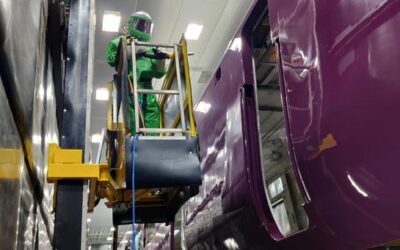
During abrasive blasting, operators can be exposed to dust and other airborne contaminants. Supplied-air respiratory protective equipment helps protect the wearer by delivering air from a separate compressed-air source.
However, this protection is only effective if the air reaching the operator is clean and safe to breathe. Contaminated breathing air could expose the operator through the equipment intended to protect them.
BS EN 12021 provides recognised requirements for breathing-air quality. Understanding these requirements, testing the air regularly and maintaining the complete supply system are important parts of respiratory safety during blasting operations.
What is BS EN 12021?
BS EN 12021:2014 specifies requirements for the quality of compressed gases supplied for use with respiratory protective equipment.
The standard covers oxygen levels and contaminants including carbon monoxide, carbon dioxide, oil and moisture. It provides measurable criteria that can be used to determine whether compressed air is suitable for breathing purposes.
HSE guidance also states that air supplied to breathing apparatus should be clean and safe to breathe. In addition to meeting the appropriate air-quality requirements, the supply must provide the pressure and airflow specified by the breathing-apparatus manufacturer.
This means breathing-air compliance is not limited to a single test result. It requires businesses to consider the air source, compressor, filters, hoses, connections and respiratory equipment as one complete system.
Why does breathing-air quality matter during abrasive blasting?
Abrasive blasting can generate significant quantities of dust. Depending on the abrasive, surface and coating being removed, the working environment may also contain hazardous substances.
Where supplied-air breathing apparatus is used, the operator depends on air delivered from outside this contaminated environment. If exhaust fumes, oil, moisture or other contaminants enter the compressed-air supply, they may be delivered directly to the wearer.
Breathing air cannot be assessed reliably by sight or smell alone. Carbon monoxide, for example, is colourless, tasteless and odourless. Testing is therefore needed to provide objective evidence of the quality of the supplied air.
What does BS EN 12021 require?
For compressed breathing air used at atmospheric pressure, the principal requirements include:
| Component | Requirement |
| Oxygen | (21 ± 1) % by volume |
| Carbon dioxide (CO₂) | ≤ 500ml m-3 ppm |
| Carbon monoxide (CO) | ≤ 5ml m-3 (ppm) |
| Oil | ≤ 0.5 mg m-3 |
| Odour and taste | No significant odour or taste |
| Liquid water | None present |
The standard also addresses water vapour and other possible contaminants. Substances should not be present at concentrations capable of causing toxic or harmful effects.
The contaminants that need particular attention may vary between workplaces. Testing and risk assessments should therefore reflect the equipment, processes and surrounding environment rather than relying on a generic approach.
What contaminants can affect breathing air?
Contamination can enter or develop within a compressed-air system in several ways.
| Contaminant | Possible source or concern |
| Carbon monoxide | Vehicle exhausts, generators, boilers or other combustion products entering the compressor intake |
| Carbon dioxide | Poor-quality intake air or unsuitable surrounding conditions |
| Oil | Compressor oil, oil aerosols or inadequate filtration |
| Moisture | Water vapour and condensation within the compressed-air system |
| Particulates | Contaminated intake air, deteriorating components, filters or deposits within pipework |
| Other substances | Nearby industrial processes or changes in the working environment |
The position of the compressor intake is particularly important. An intake located close to vehicles, engine-driven equipment or combustion processes could draw contaminated air into the system.
Mobile compressors require additional consideration because conditions can change from one site to another. A position that was suitable at a previous location may introduce new risks when the equipment is moved.
Contamination does not always mean that the compressor has failed. It may result from inadequate filtration, poor maintenance, contaminated pipework or changes around the intake. The complete breathing-air system should therefore be considered when investigating a problem.
Why and when should breathing air be tested?
Breathing-air testing can help businesses:
- Confirm that the supplied air meets the relevant quality criteria
- Identify contamination that operators may be unable to detect
- Monitor compressor and filtration performance
- Maintain evidence of breathing-air quality
- Detect changes before they place operators at risk
- Support wider respiratory protection arrangements
HSE’s Respiratory Protective Equipment at Work guidance explains that the frequency of air-quality testing should be based on a risk assessment. Airblast recommends that breathing-air samples are tested at least every three months, with more frequent testing where the quality of the air cannot be assured consistently.
Additional testing may be appropriate following:
- Significant compressor maintenance
- Changes to filters or air-treatment equipment
- Alterations to the compressed-air system
- Relocation of a mobile compressor
- Changes in nearby vehicles, equipment or processes
- A suspected contamination incident
- An unusual taste, smell, pressure drop or presence of moisture
A previous pass should not be treated as proof that the supply will always remain suitable. Test results represent the quality of the air at the time and point at which the sample was taken.
What happens during an Airblast breathing air quality test?
Airblast provides nationwide breathing air quality testing for businesses using supplied-air respiratory protective equipment.
During a test, a trained Airblast technician measures:
- Breathing-air flow
- Oxygen
- Carbon monoxide
- Carbon dioxide
- Oil
- Water
- Dew point
Testing typically takes approximately 45 minutes and provides an immediate pass-or-fail result. Where the supply passes, Airblast issues a test certificate valid for three months.
If the air fails to meet the required criteria, Airblast can provide practical guidance on the next steps. The investigation may include the compressor intake, filters, air-treatment equipment, maintenance condition, pipework and other parts of the breathing-air system.
The affected supply should not be relied upon for respiratory protection until the source of the problem has been identified, corrective action has been taken and appropriate checks have confirmed that acceptable air quality has been restored.
A practical breathing-air compliance checklist
Testing is only one part of maintaining a safe breathing-air supply. Businesses should also consider the following checks as part of their respiratory protection arrangements.
Compressor and filtration
Maintain the compressor, filters and air-treatment equipment in accordance with the manufacturers’ instructions. Investigate unusual pressure drops, tastes, odours or moisture at outlet fittings, as these may indicate that the filtration system requires attention.
Air intake position
Locate compressor intakes in an area where they will not draw in exhaust fumes, combustion products or contaminants from nearby processes. Review the position whenever equipment or site conditions change.
Hoses and connections
Inspect breathing-air hoses, couplings and connections for wear, damage and contamination. Components used for breathing air should be clearly identified and protected against incorrect connection where appropriate.
Pressure and airflow
Confirm that the operator receives the pressure and airflow specified by the breathing-apparatus manufacturer. Acceptable air quality alone does not make a supply suitable if insufficient air reaches the wearer.
Respiratory equipment
Ensure the breathing apparatus is correctly selected for the hazard, compatible with other PPE and maintained in accordance with the manufacturer’s instructions. Operators should also be trained to use it correctly and report potential problems.
Records and reviews
Keep appropriate testing and maintenance records. Review the breathing-air arrangements when equipment, processes or working conditions change.
Making breathing-air safety part of everyday operations
BS EN 12021 provides a clear basis for assessing the quality of compressed gases used with respiratory protective equipment. For abrasive blasting businesses, meeting these requirements helps ensure that supplied-air equipment protects the operator without introducing another source of exposure.
Regular testing should be supported by correct intake positioning, effective filtration, planned compressor maintenance and routine inspection of the complete breathing-air system.
Airblast provides breathing air quality testing, monitoring equipment, compressor servicing, filtration and respiratory protection solutions for industrial operations. Training is also available for teams that want to improve their understanding of compressed-air safety and breathing-air quality.
Need support with breathing-air compliance? Speak to the Airblast team to arrange a breathing air quality test or review the equipment supporting your blasting operation.