Managing Overspray in Hot and Dry Conditions
Hot and dry environments can create challenging conditions for industrial spraying. While they may seem ideal for faster drying times, they often lead to increased overspray, reduced coating control, and unnecessary material waste.
In sectors where coating quality, consistency, and efficiency are critical, understanding how environmental conditions affect spray behaviour is essential. By adjusting spray techniques and equipment setup, it’s possible to maintain performance even in demanding climates.
Why overspray increases in hot and dry conditions
Overspray occurs when coating material fails to land on the intended surface. Instead, it becomes airborne, leading to wasted product, inconsistent finishes, and additional clean-up.
In hot and dry conditions, several factors contribute to this:
- Faster solvent evaporation: Coatings begin to dry mid-air before reaching the surface, reducing adhesion and increasing airborne particles.
- Lower humidity levels: Dry air accelerates evaporation, making it harder for coatings to flow and level correctly once applied.
- Increased air movement: Warm environments often require ventilation or airflow, which can carry atomised particles away from the target surface.
The result is reduced transfer efficiency, meaning more material is required to achieve the desired coating thickness.
The role of atomisation in spray control
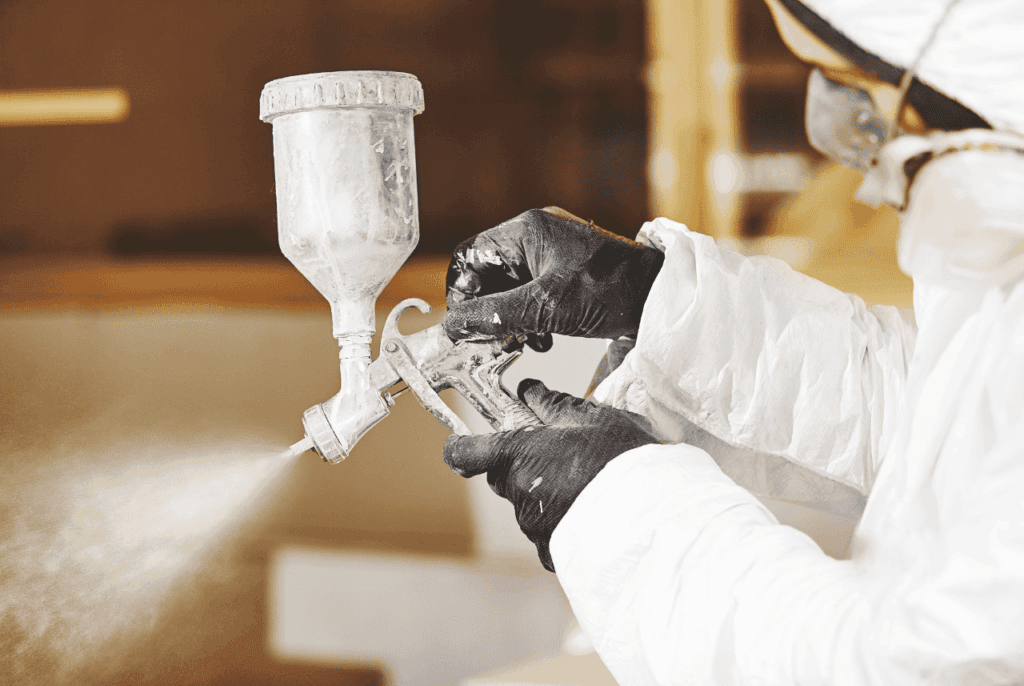
Atomisation is the process of breaking coating material into fine droplets. While finer atomisation can create a smoother finish, it can also increase overspray if not carefully controlled.
In hot conditions:
- Excessive atomisation produces lighter droplets that are more easily carried away by air currents
- High pressure settings can worsen drift and reduce control
- Incorrect nozzle selection may create an uneven spray pattern
Balancing atomisation is key. The goal is to achieve a consistent spray pattern without producing excessively fine particles that are prone to drift.
Spray distance and technique matter
Operator technique plays a significant role in overspray control, particularly in challenging environments.
Key considerations include:
- Maintaining correct spray distance: Spraying too far from the surface allows droplets more time to dry mid-air and drift away.
- Consistent gun movement: Uneven speed or angles can lead to patchy application and increased waste.
- Correct overlap: Poor overlap results in uneven coating thickness and may require additional passes, increasing material usage.
Keeping the spray gun at the optimal distance and angle helps ensure more coating reaches the surface as intended.
Managing airflow and environmental conditions
Airflow is essential for safety and visibility, but it must be controlled.
Poorly managed airflow can:
- Carry overspray away from the target area
- Disrupt spray patterns
- Introduce contaminants into the coating process
In hot and dry environments, consider:
- Directional airflow control to guide overspray away without affecting application
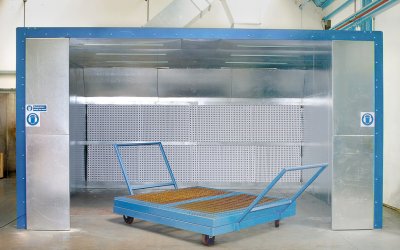
- Enclosed or controlled spray areas where possible
- Balanced ventilation systems that maintain air quality without excessive turbulence
Environmental control is not about eliminating airflow, but about managing it effectively.
Equipment setup and optimisation
The right equipment setup plays a major role in reducing overspray and improving efficiency.
Important factors include:
- Nozzle size and type: Selecting the correct nozzle helps control droplet size and spray pattern.
- Pressure settings: Lower, controlled pressure can reduce excessive atomisation and improve transfer efficiency.
- Spray technology: Systems designed for higher transfer efficiency can significantly reduce material loss.
Regular equipment checks and maintenance also ensure consistent performance across projects.
Practical steps to improve overspray control
To maintain efficiency in hot and dry conditions:
- Adjust pressure and atomisation to suit environmental conditions
- Optimise spray distance and maintain consistent technique
- Select appropriate nozzles for the coating and application
- Control airflow to minimise turbulence and drift
- Use environmental controls where possible to stabilise conditions
- Train operators to recognise and adapt to changing environments
Small adjustments can lead to significant improvements in material usage and finish quality.
Improving efficiency and finish quality
Overspray is more than just wasted material. It affects coating performance, project timelines, and overall operational costs.
By understanding how heat, low humidity, and airflow influence spray behaviour, businesses can take a more controlled and informed approach to application. The result is improved coating consistency, reduced rework, and better use of materials.
In demanding environments, effective overspray control is not just about technique – it’s about combining the right equipment, environmental awareness, and operator expertise to achieve reliable results every time.