Reducing Rework in Industrial Coating Projects

Industrial coating projects are built around precision and consistency. When everything is controlled correctly, coatings perform as expected, protecting assets and supporting long-term durability.
However, when issues arise during preparation or application, rework becomes necessary. This can quickly impact timelines, increase material consumption and reduce overall efficiency across a project. Understanding what causes rework – and how to prevent it – is key to achieving reliable, first-time results.
Why rework matters
Rework is rarely just a minor inconvenience. It often has a knock-on effect across the entire operation.
When coatings fail or require correction:
- Project schedules are delayed
- Additional labour is required
- Material usage increases
- Equipment downtime becomes more frequent
In many cases, rework also introduces further risk. Re-blasting or reapplying coatings can affect surface integrity, especially if not carefully controlled. Reducing rework is not just about quality – it is about maintaining efficiency and protecting project margins.
Common causes of rework
1. Poor surface preparation
Surface preparation is one of the most critical stages in any coating process. If the substrate is not properly prepared, coating performance will be compromised from the outset.
Common issues include:
- Inadequate removal of rust, scale or previous coatings
- Incorrect surface profile for coating adhesion
- Contamination from dust, oil or moisture
Even small inconsistencies at this stage can lead to coating failure, requiring full or partial rework.
2. Inconsistent application
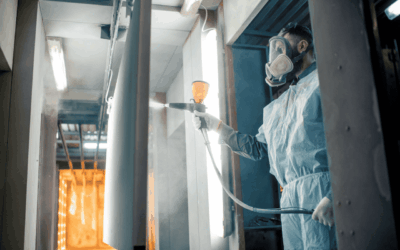
Application technique plays a major role in coating quality. Variations in spray setup or operator technique can lead to uneven coverage and defects.
Typical problems include:
- Incorrect spray pressure or nozzle selection
- Uneven film thickness
- Poor spray patterns or overlap
These inconsistencies can result in runs, dry spray or insufficient coverage, all of which may require correction.
3. Environmental conditions
Environmental factors are often underestimated but can significantly affect coating performance.
Key risks include:
- High or low temperatures impacting curing times
- Humidity introducing moisture contamination
- Airflow disrupting spray patterns or increasing overspray
Without proper environmental control, even well-prepared surfaces and correct application techniques can produce inconsistent results.
4. Equipment wear and maintenance issues
Worn or poorly maintained equipment can introduce variability into the coating process.
Common issues include:
- Worn spray tips affecting atomisation
- Inconsistent pressure from compressors or pumps
- Blockages or contamination in air or fluid lines
These problems often develop gradually, making them harder to detect until defects begin to appear.
How to reduce rework
Minimising rework requires a controlled, consistent approach across every stage of the process.
Focus on surface preparation standards
Ensuring surfaces are prepared to the correct specification is essential. This includes:
- Achieving the required cleanliness standard
- Producing a consistent surface profile
- Preventing contamination before coating
Clear inspection points before application can help identify issues early.
Optimise spray setup and technique
A consistent spray setup supports repeatable results.
This includes:
- Selecting the correct spray equipment and nozzle size
- Maintaining stable pressure and flow rates
- Training operators to apply coatings evenly and consistently
Small adjustments in setup can significantly improve transfer efficiency and finish quality.
Control the environment
Where possible, environmental conditions should be monitored and controlled.
Practical steps include:
- Managing airflow within spray areas
- Monitoring temperature and humidity levels
- Using extraction and ventilation systems effectively
These controls help reduce variability and support consistent curing and adhesion.
Maintain equipment regularly
Routine maintenance plays a key role in preventing defects.
This should include:
- Inspecting and replacing worn components
- Checking air and fluid systems for contamination
- Ensuring pressure systems are operating consistently
Well-maintained equipment delivers more predictable performance and reduces the risk of unexpected issues.
Improve process awareness
Operator awareness is just as important as equipment and setup.
Providing training and clear procedures helps teams:
- Identify potential issues early
- Maintain consistent application standards
- Understand how changes in conditions affect results
A more informed team is better equipped to prevent defects before they occur.
Achieving first-time quality
Reducing rework is ultimately about control. When surface preparation, application and environmental conditions are aligned, coating processes become more predictable and efficient.
By focusing on:
- Consistent preparation
- Controlled application
- Reliable equipment performance
businesses can achieve higher first-time quality, reduce material waste and keep projects on track.
In industrial coating, getting it right the first time is not just a quality objective – it is a critical part of maintaining productivity and long-term performance.