What Is Shot Peening and How Is It Used in Surface Treatment?
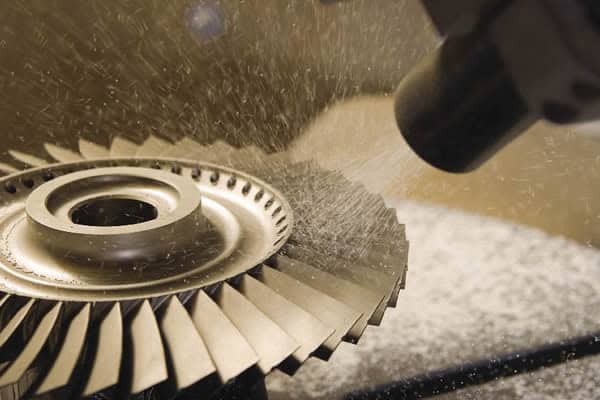
In high-performance engineering environments, surface condition is often the difference between component failure and long-term reliability. From aircraft landing gear to automotive transmission springs, many critical parts are subjected to repeated cyclic loading. Over time, this loading can lead to fatigue cracking and premature failure.
Shot peening is a controlled mechanical surface treatment designed specifically to combat this problem. Although it uses similar equipment principles to blasting, its purpose and outcome are fundamentally different.
This guide explains the science behind shot peening, how it works, where it is used, and why process control is essential in high-specification industries.
What is shot peening?
Shot peening is a cold working process in which small spherical media are propelled at high velocity onto a component surface. Each impact creates a tiny indentation, plastically deforming the surface layer
Unlike abrasive blasting, which removes material for cleaning or preparation, shot peening does not aim to strip or profile a surface. Instead, it deliberately induces compressive residual stresses in the outer layer of the material.
These compressive stresses counteract tensile stresses that occur during service. Since fatigue cracks initiate and grow under tensile stress, introducing compressive stress significantly improves fatigue resistance and structural integrity.
In short:
- Abrasive blasting = surface cleaning or profiling
- Shot peening = surface strengthening
The science behind compressive stress
Most metal fatigue failures begin at the surface. Microscopic cracks form under repeated tensile loading and propagate over time.
Shot peening works by:
- Creating controlled deformation at the surface
- Expanding the outer layer slightly
- Locking compressive residual stress into the surface
Because cracks struggle to grow in a compressive stress field, this process can dramatically increase component lifespan.
The benefits include:
- Improved fatigue resistance
- Reduced risk of stress corrosion cracking
- Greater resistance to fretting fatigue
- Extended service life of critical components
Where is shot peening used?
Shot peening is widely used in industries where components experience cyclic or dynamic loading.
Aerospace
Aircraft components such as turbine blades, landing gear, fasteners and structural parts undergo intense stress cycles. In aerospace manufacturing and MRO environments, shot peening is often specification-driven, with defined intensity ranges, coverage requirements and full traceability documentation.
Automotive
In the automotive sector, high-performance parts including:
- Gear teeth
- Transmission shafts
- Coil springs
- Connecting rods
are frequently shot peened to improve durability and resistance to cracking under repeated load.
Energy and heavy industry
Power generation components, oil and gas equipment, and heavy industrial machinery benefit from surface strengthening where failure would result in costly downtime.
How shot peening differs from standard blasting
It is easy to confuse shot peening with abrasive blasting because both involve projecting media at a surface using air or wheel blast systems.
However, the objectives and process controls are entirely different:
| Abrasive blasting | Shot peening |
| Cleans or profiles surface | Strengthens surface |
| Removes contamination | Does not aim to remove material |
| Surface roughness is primary metric | Residual compressive stress is primary metric |
| Less tightly controlled | Highly controlled and verified |
In shot peening, parameters such as media size, hardness, velocity, coverage and angle of impact are carefully specified and validated.
Equipment used in shot peening
In high-specification environments, peening systems must deliver consistent media flow, stable velocity and repeatable coverage – supported by calibrated control systems and documented verification processes.
Shot peening can be carried out using:
- Air-blast systems
- Wheel blast machines
- Pencil blasters
Process validation is critical. The Almen test measures peening intensity by observing the arc height produced in a standardised test strip after peening. This ensures the process achieves the correct energy level without over-peening.
Over-peening can introduce excessive cold work, surface damage or microcracking – demonstrating why controlled shot blasting must be carefully managed.
The importance of process control
Shot peening is not simply about projecting media at a surface. It is a specification-driven treatment process.
Key controlled variables include:
- Media type
- Media size and hardness
- Impact velocity
- Coverage percentage
- Exposure time
- Angle of impingement
In aerospace and defence environments, traceability and compliance are mandatory. Documentation, calibration, and verification are essential to ensure repeatable results.
For engineers and procurement teams, this means selecting a solution provider that understands not just equipment supply, but the broader technical requirements of surface strengthening applications.
When is shot peening appropriate?
Shot peening is typically specified when:
- Components are subject to cyclic loading
- Fatigue failure risk must be minimised
- Surface crack initiation needs to be suppressed
- Service life extension is required
- Compliance with aerospace or automotive standards is mandatory
It is not a substitute for surface preparation prior to coating. Rather, it is an engineered treatment used to enhance mechanical performance.
Supporting advanced surface treatment applications
As industries push for lighter materials, higher performance and longer service intervals, surface engineering plays an increasingly critical role.
Shot peening sits within a broader category of advanced surface treatment solutions. It requires a deep understanding of materials science, process control and application requirements.
At Airblast, we recognise that high-specification industrial applications demand more than standard blasting capability. They require controlled systems, repeatable performance and technical support aligned with industry standards.
By understanding the science behind shot peening and the importance of process verification, engineers and decision-makers can make informed choices about when and how this treatment should be applied.