What Is Surface Profile and Why Does It Matter?
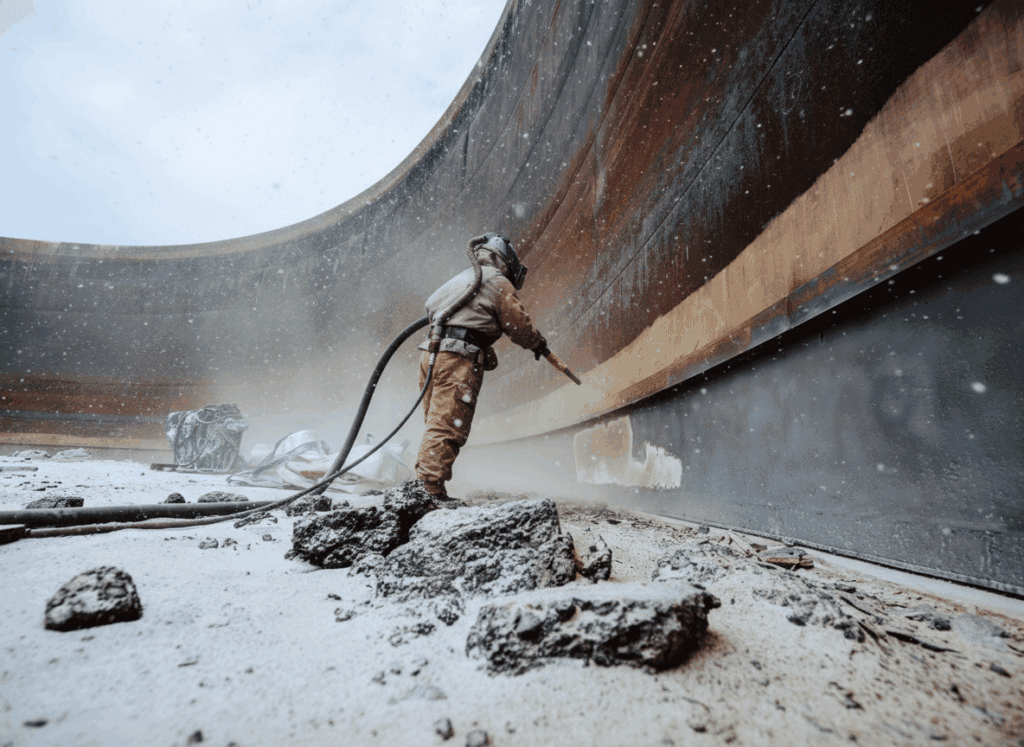
Abrasive blasting does more than remove rust, old coatings and other surface contaminants. It also creates a textured surface that helps the new coating adhere to the substrate.
This texture is known as the surface profile. Achieving the correct profile is an important part of surface preparation, as it can directly affect coating adhesion, coverage and long-term performance.
What is surface profile?
Surface profile describes the pattern of peaks and valleys created on a surface during abrasive blasting. It may also be referred to as the blast profile, anchor profile or surface roughness.
When a surface is viewed normally, it may appear relatively even. At a microscopic level, however, abrasive blasting creates a textured finish. This increases the available surface area and gives the coating something to grip.
The required surface profile is usually specified by the coating manufacturer and measured in microns. Requirements vary depending on factors such as:
- The substrate being prepared
- The coating system being applied
- The coating thickness
- The environment in which the finished surface will be used
- The relevant project or industry standards
There is no single surface profile that is suitable for every application. The aim is to create a profile that matches the requirements of the intended coating system.
How does abrasive blasting create a surface profile?
During abrasive blasting, particles are propelled at high speed towards the surface. The impact removes unwanted material and creates small indentations in the substrate. The resulting abrasive blasting surface profile will be influenced by several factors.
Abrasive type
Different blasting abrasives have different levels of hardness, density and durability. These properties affect how the abrasive behaves when it strikes the surface and the profile it produces. Metallic abrasives, mineral abrasives and other blasting media can therefore produce different results, even when used on the same substrate.
Abrasive size
Larger abrasive particles will generally create a deeper and coarser blast profile. Finer particles tend to produce a shallower profile and a smoother finish. Using an abrasive that is unnecessarily large can create a profile that is too deep for the coating. An abrasive that is too fine may not produce enough texture for effective adhesion.
Abrasive shape
Angular abrasive particles cut into the surface and normally create a sharper, more defined profile. Rounded or spherical particles tend to peen the surface, producing a different pattern of peaks and valleys. The correct choice will depend on the required finish, the substrate and the coating specification.
Blasting pressure
Increasing blasting pressure can increase the force with which the abrasive strikes the surface. However, pressure should be controlled carefully. More pressure does not automatically mean a better result and can lead to excessive abrasive use or an unsuitable profile.
Nozzle angle and distance
The position of the nozzle in relation to the workpiece also affects the blasting result. Changes in nozzle angle, distance and movement can create inconsistencies across the surface. Maintaining an appropriate technique helps produce a more uniform coating surface profile.
Condition of the equipment and abrasive
Worn nozzles, unstable pressure, moisture in the compressed air or contaminated abrasive can all affect consistency. Regular equipment checks and suitable abrasive handling are therefore important parts of controlling the finished profile.
Why does surface profile matter for coating adhesion?
A protective coating needs to form a strong bond with the surface beneath it. The profile created by blasting provides a mechanical key that supports this adhesion.
If the profile is correct, the coating can reach into the valleys and form a secure, consistent bond across the prepared surface. When the profile does not match the coating requirements, its performance may be affected even if the surface appears clean.
Surface cleanliness and surface profile are closely connected, but they are not the same. A steel surface can meet the required visual cleanliness standard while still having an unsuitable profile. Both must be checked as part of the surface preparation process.
What happens if the surface profile is too smooth?
A surface that is too smooth may not provide enough texture for the coating to adhere effectively.
This can increase the risk of:
- Poor coating adhesion
- Peeling or delamination
- Premature coating failure
- Reduced protection against corrosion
- Additional repair and rework
Simply removing visible rust or contamination is not always enough. The blasting process must also create the profile required by the coating system.
What happens if the surface profile is too rough?
A deeper profile is not necessarily better. If the profile is too rough, the coating may struggle to cover the highest peaks adequately.
This can lead to:
- Peak rusting where the coating is too thin
- Pinholes or gaps in coverage
- Uneven coating thickness
- Higher coating consumption
- Difficulty achieving the required finish
- Reduced long-term protection
The coating must be thick enough to cover both the peaks and valleys of the surface profile. If the profile is deeper than expected, more coating may be required to achieve sufficient coverage over the peaks.
How do you determine the correct surface profile?
The required profile should be established before blasting begins. The coating manufacturer’s technical data sheet should be the starting point, alongside the project specification and any relevant standards.
Abrasive type and size can then be selected to help achieve the required result. Where the outcome is uncertain, a test patch can be blasted and measured before work continues across the full surface.
Operators should consider:
- The coating manufacturer’s recommended profile range
- The substrate and its existing condition
- The specified coating thickness
- The selected blasting abrasive
- The available blasting pressure and equipment
- The required surface cleanliness standard
- How the profile will be measured and recorded
Conditions should also be monitored throughout the project. Abrasive condition, equipment wear and changes in blasting technique can all cause the profile to vary.
Effective surface preparation supports coating performance
Surface preparation is fundamental to the performance of any protective coating system. Achieving the correct level of cleanliness while creating a suitable and consistent surface profile gives the coating the best possible foundation.
Careful abrasive selection, properly maintained blasting equipment and regular surface profile measurement all help reduce the risk of coating failure and unnecessary rework.
Airblast supplies a wide range of abrasive blasting equipment, abrasives and surface preparation solutions. Our team can help you select suitable equipment for your application and achieve the required preparation standard.
Speak to the Airblast team about your abrasive blasting and surface preparation requirements.