Common Health and Safety Risks in Industrial Environments
Industrial blasting and spraying operations expose operators to a range of hazards that can affect both immediate safety and long-term health if not properly controlled.
Understanding the most common health and safety risks in blasting and spraying is the first step towards reducing incidents, protecting operators, and maintaining compliant working environments. Below are some of the key risks faced in industrial spraying and blasting environments – and why effective controls matter.
1. Airborne dust and hazardous particles
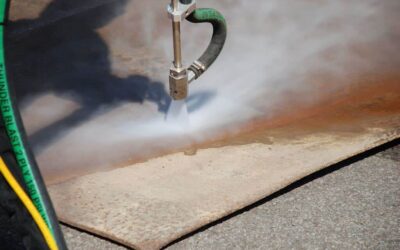
Depending on the abrasive and substrate used, abrasive blasting generates large volumes of airborne dust and fine particulate matter. This dust may contain hazardous substances such as silica, heavy metals, or coating residues.
Key risks include:
- Respiratory irritation and reduced lung function
- Long-term lung diseases from repeated exposure
- Eye irritation and reduced visibility during operations
Without proper containment, ventilation, and respiratory protection, dust exposure can quickly become a serious operator health risk.
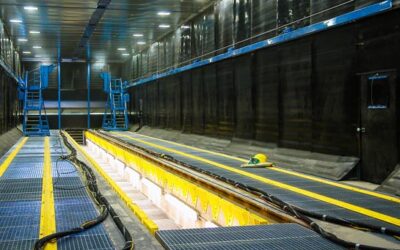
To control this risk, blasting environments should be designed to manage dust at source. This includes enclosed blast rooms and blast booths with dust extraction and filtration systems to remove airborne particles and maintain clear visibility during blasting.
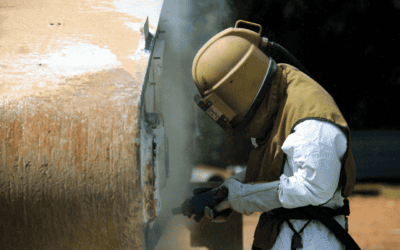
Alongside environmental controls, suitable respiratory PPE remains essential. This includes blasting helmets with integrated breathing air systems and filtration to supply clean, breathable air to the operator, as well as conventional respiratory masks for lower-risk or intermittent tasks.
These layers of protection help reduce exposure to fine particulates that cannot be fully eliminated through extraction alone, particularly during high-output or continuous blasting operations.
2. Fumes and vapours from coatings and solvents
Industrial spraying introduces additional hazards in the form of chemical vapours and fumes released from paints, solvents, and coatings.
Potential impacts include:
- Dizziness, headaches, and nausea
- Skin and eye irritation
- Long-term effects on respiratory and nervous systems
In enclosed or poorly ventilated spaces, these vapours can build up rapidly, increasing both health risks and the likelihood of fire or explosion.
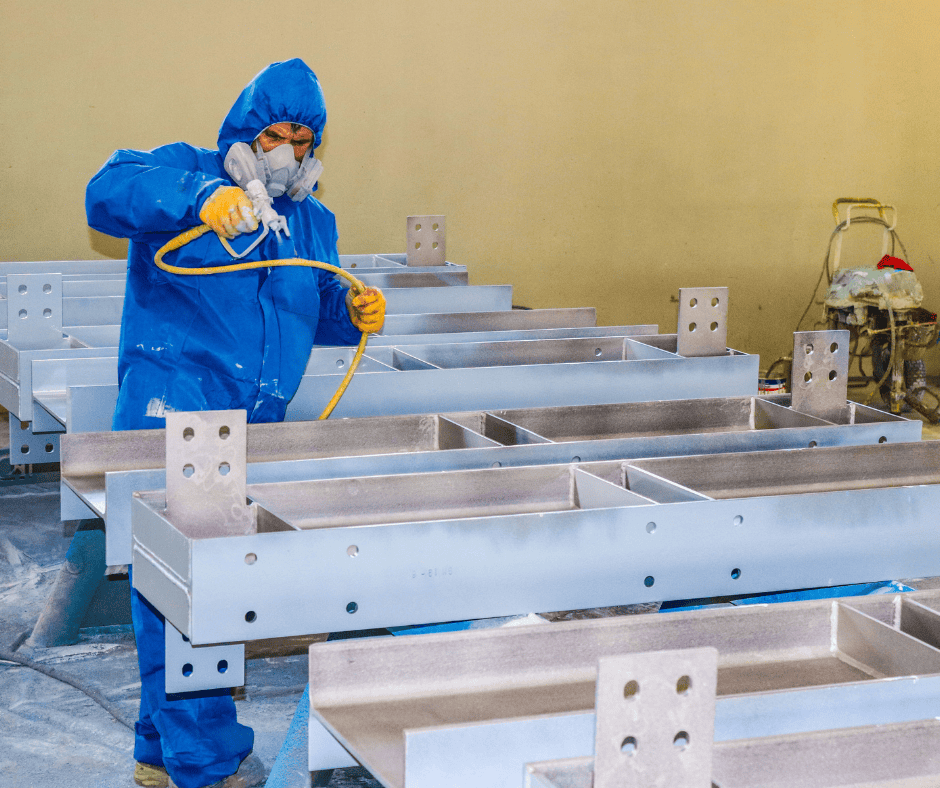
As with blasting environments, spraying areas must be designed to safely capture and remove airborne vapours. This includes properly engineered spray booths and spray rooms with controlled airflow and extraction systems that direct fumes away from the operator and through suitable filtration before discharge.
Alongside environmental controls, appropriate respiratory protection remains essential in order to help operators work safely when handling solvent-based coatings and other hazardous materials.
3. Noise exposure
Blasting and spraying equipment generates high noise levels, particularly from compressors, blast nozzles, and air-driven machinery.
Uncontrolled noise can lead to:
- Temporary or permanent hearing loss
- Fatigue and reduced concentration
- Increased likelihood of communication errors
Prolonged exposure without suitable hearing protection significantly increases the risk of occupational hearing damage.
Reducing noise exposure starts with how blasting and spraying environments are designed. Enclosed blast rooms and spray booths help contain sound, while sound-attenuated equipment and correctly selected nozzles can lower noise output at source. Managing airflow, extraction systems, and equipment layout also plays a role in limiting how far noise travels within a facility.
Where noise cannot be fully engineered out, suitable hearing protection remains essential. Ear defenders and integrated helmet systems help protect operators during prolonged or high-output tasks, supporting safer communication and long-term hearing health.
4. High-pressure equipment and mechanical hazards
Blasting and spraying rely on pressurised systems to deliver abrasive and coatings efficiently. These systems must be treated with caution.
Common mechanical hazards include:
- Hose failures and whip injuries
- Accidental discharge of abrasive or coating materials
- Equipment malfunction due to poor maintenance
Improper handling or poorly maintained equipment can result in serious injury in a matter of seconds.
To reduce these risks, blasting and spraying systems should be designed with safety in mind. This includes selecting components that can safely withstand operating pressures, ensuring systems can be isolated quickly in an emergency, and positioning equipment to reduce the risk of contact with pressurised parts. Well-designed blasting and spraying environments also allow safer access for inspection, servicing, and fault finding.
Alongside system design, appropriate PPE remains essential. Protective clothing and helmets help shield operators from rebound abrasive, high-pressure spray, and accidental discharge during use.
5. Slips, trips and poor housekeeping
Industrial environments often involve hoses, cables, spent abrasive, and overspray residues across work areas.
Typical risks include:
- Slipping on overspray or wet coatings
- Tripping over air lines or blast hoses
- Reduced emergency access routes
These hazards may appear minor, but they account for a large proportion of workplace injuries and can become critical in emergency situations. Clear walkways, defined work zones, and regular cleaning schedules play an important role in keeping access routes open and preventing avoidable accidents during normal operation and emergency response.
6. Skin contact and chemical exposure
Abrasives and coatings can be highly abrasive or chemically aggressive when they come into direct contact with the skin.
Possible consequences include:
- Chemical burns
- Dermatitis and allergic reactions
- Long-term skin sensitivity
Protective clothing and correct handling procedures play a major role in preventing chronic skin conditions. Protective suits, gloves, and helmets create a barrier between the operator and hazardous materials, helping to prevent chemical burns and long-term skin damage during routine blasting and spraying tasks.
Protecting operator health for the long term
Industrial spraying safety and blasting safety are not only about meeting legal requirements, they are about protecting people who work in demanding environments every day.
Operators who are properly equipped, trained, and supported are more likely to:
- Work efficiently
- Avoid preventable injuries
- Remain healthy over longer careers
Reducing health and safety risks in blasting and spraying helps create safer, more productive workplaces and supports long-term operational reliability.
At Airblast Limited, safety remains a core consideration across equipment selection, system design, and operator support. Understanding common risks is a crucial part of improving safety standards and maintaining responsible industrial operations.