Surface Preparation for Heavy Equipment Production

Heavy equipment used across construction, infrastructure and manufacturing sectors operates in highly abrasive and corrosive environments. Protective coatings and surface preparation therefore play a critical role in maintaining equipment durability, reliability and long-term performance.
To maintain durability and long-term performance, effective surface preparation is essential throughout both manufacturing and refurbishment processes. Abrasive blasting plays a critical role in preparing heavy equipment surfaces for coating application, corrosion protection and ongoing operational reliability.
From large structural components and fabricated assemblies to refurbishment of worn machinery, blasting processes help manufacturers achieve cleaner surfaces, stronger coating adhesion and more consistent finishing results across complex industrial applications.
Why surface preparation matters in heavy equipment production
Protective coatings can only perform effectively when applied to properly prepared surfaces. Heavy equipment components are often manufactured from steel and other materials that require coatings to protect against corrosion, wear and environmental exposure. Without thorough surface preparation, contaminants and existing coatings may interfere with adhesion and reduce long-term coating performance.
Poor preparation can lead to:
- Premature coating failure
- Corrosion development
- Reduced equipment lifespan
- Increased maintenance requirements
- Higher rework costs
- Unplanned operational downtime
Abrasive blasting helps create the correct surface profile required for coatings to bond effectively while removing contaminants that could compromise finish quality.
Common surface challenges in heavy equipment manufacturing
Heavy equipment manufacturing environments present several surface preparation challenges due to the size, condition and complexity of the components involved.
Unlike smaller fabricated parts, machinery assemblies and structural equipment components often experience:
- Heavy mill scale
- Corrosion and oxidation
- Weld contamination
- Oil and grease build-up
- Existing coating systems
- Embedded dirt and debris
- Irregular or complex surface geometries
Large machinery components may also contain difficult-to-access areas where maintaining consistent blast coverage can become more challenging.
Effective blasting systems must therefore balance cleaning performance, operator accessibility and process consistency across a wide range of component types and production conditions.
Removing heavy contamination and existing coatings
Refurbishment projects often involve removing old coatings, corrosion and contamination from equipment that has operated in highly aggressive environments. Machinery, construction equipment and industrial plant assets may accumulate years of coating layers, rust and surface contamination that require controlled removal before recoating or repair work can begin.
Abrasive blasting provides an efficient method for:
- Removing failed coatings
- Eliminating corrosion
- Cleaning welded areas
- Preparing repair sections
- Restoring heavily contaminated surfaces
Selecting the correct abrasive type and blasting parameters is important to ensure contaminants are removed effectively without damaging the substrate beneath.
Managing large and complex components
Heavy equipment manufacturing frequently involves oversized fabricated structures and machinery components that require specialist handling during blasting operations.
Large frames, booms, buckets, chassis and fabricated assemblies may present logistical challenges due to:
- Component weight and size
- Limited access areas
- Complex geometries
- Variable surface conditions
- Production flow requirements
Blast rooms, recovery systems and handling equipment must be designed to accommodate these operational demands while maintaining efficient workflow throughout the preparation process. In higher-throughput manufacturing environments, integrated handling systems may also support more efficient movement of large equipment through the blasting process.
Conveyor systems, hanger configurations and overhead rail solutions can help improve accessibility and maintain production flow when processing oversized or complex machinery components. Automated and semi-automated blasting systems may also help improve consistency across repetitive production operations.
The importance of surface profile consistency
Creating a consistent anchor profile is one of the most important outcomes of abrasive blasting. Protective coatings require an appropriate surface texture to achieve strong mechanical adhesion. Inconsistent blasting can lead to uneven profiles that affect coating thickness, durability and long-term performance.
Maintaining process consistency helps support:
- Reliable coating adhesion
- Improved corrosion resistance
- More uniform coating application
- Reduced coating defects
- Longer service life of equipment
Controlling factors such as abrasive size, blast pressure, nozzle condition and operator technique all contribute to achieving a more consistent blasting result.
Abrasive control and equipment selection
Selecting suitable blasting equipment and abrasive media is essential for maintaining productivity and coating quality within heavy equipment production environments.
Different applications may require varying levels of surface preparation depending on:
- Substrate material
- Coating specification
- Surface condition
- Production throughput requirements
- Environmental considerations
Blast systems may include:
- Manual blasting equipment
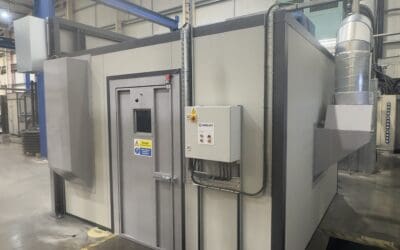
- Blast rooms
- Recovery systems
- Dust collection units
- Automated blasting solutions
- Ventilation and air treatment systems
Equipment selection should also consider component size, throughput requirements and facility layout. Heavy equipment manufacturing environments often require systems capable of processing large fabricated assemblies efficiently while maintaining consistent blasting performance across varying surface conditions.
Abrasive selection also plays an important role in balancing cleaning performance, profile generation and operational efficiency.
Using the correct abrasive helps improve:
- Surface cleanliness
- Productivity rates
- Abrasive consumption control
- Dust generation management
- Overall process consistency
Supporting productivity and reducing rework
Inconsistent surface preparation can create significant downstream problems during coating application and assembly processes. Coating failures, adhesion issues and contamination-related defects often result in costly rework that disrupts production schedules and increases operational costs.
Maintaining controlled blasting processes helps manufacturers:
- Reduce rework rates
- Improve coating reliability
- Increase production efficiency
- Improve quality consistency
- Extend maintenance intervals
- Support long-term equipment durability
Regular equipment maintenance and operator training also help ensure blasting systems continue performing consistently under demanding production conditions.
Blasting for long-term equipment protection
Heavy machinery is expected to operate reliably in highly aggressive industrial environments for extended periods.
Whether equipment is used within mining operations, infrastructure projects, marine applications or construction environments, protective coating systems form a critical part of long-term asset protection strategies.
Effective abrasive blasting supports these protection systems by creating the clean, consistent surfaces required for durable coating performance.
When combined with suitable coating selection and controlled application processes, blasting helps improve:
- Corrosion resistance
- Equipment reliability
- Structural durability
- Lifecycle performance
- Long-term maintenance efficiency
Supporting heavy equipment manufacturing with reliable blasting solutions
Heavy equipment production demands robust and consistent surface preparation processes capable of handling large components, complex geometries and demanding operational conditions.
Abrasive blasting remains one of the most effective methods for preparing industrial machinery surfaces for coating application, refurbishment and long-term protection. By maintaining process control, selecting suitable equipment and managing abrasive performance effectively, manufacturers can improve productivity, reduce rework and extend equipment lifespan across a wide range of industrial sectors.
Airblast Limited provides blasting equipment, blast room solutions and surface preparation systems designed to support heavy equipment manufacturing, refurbishment and industrial coating operations worldwide.