Managing Ventilation and Air Quality on Indoor Spray Jobs
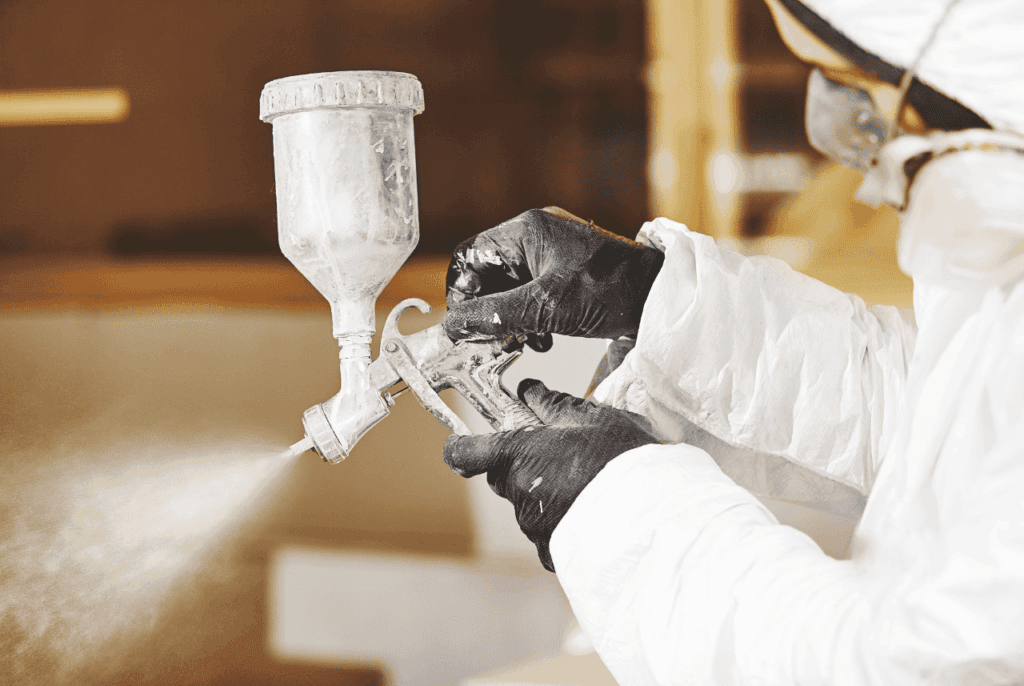
Spraying indoors offers excellent control over temperature, humidity, and dust – all essential for delivering consistent, high-quality finishes.
But in an industrial spraying environment, ventilation isn’t a standalone measure. It’s a purpose-designed system, built into the wider spray booth facility, and engineered to manage overspray, fume removal, and air cleanliness as one integrated process. Understanding how your spray booth’s ventilation system works – and how to maintain it – is key to protecting operators, meeting compliance standards, and ensuring every coating performs as intended. This guide explains the role of ventilation within industrial spray booths, the components that make up a complete ventilation system, and how to keep airflow safe, consistent, and compliant.
Why ventilation matters during indoor spraying
In an enclosed spraying environment, atomised coatings, solvent vapours, and airborne contaminants can accumulate quickly. Without an effective ventilation system running throughout the booth, these hazards can compromise both operator safety and coating performance.
Insufficient or poorly balanced ventilation can lead to:
- Contaminated finishes from recirculated overspray or dust.
- Uneven application caused by unstable airflow.
- Build-up of flammable vapours.
- Health risks including respiratory irritation and long-term exposure hazards.
HSE guidelines require employers to manage airborne contaminants and ensure ventilation is suitable for the materials and equipment being used. In industrial spraying, this is almost always achieved through a fully integrated spray booth ventilation system.
Ventilation as part of the spray booth system
In an industrial spray booth, ventilation is designed as a complete, engineered system that works as part of the booth’s overall function. It doesn’t operate as separate components – each part contributes to a controlled airflow pattern that protects workers and maintains finish quality.
A typical booth ventilation system manages:
- Air intake: Clean, filtered air drawn into the booth.
- Air movement: Controlled airflow across or down through the spraying zone.
- Air extraction: Removal of overspray-laden air.
- Filtration: Capturing paint particles before exhaust air is discharged.
- Pressure balance: Keeping the booth at slightly negative pressure to prevent leaks.
The goal is simple: maintain a continuous, predictable airflow that moves contaminants away from the operator and towards the extraction system.
Components of a spray booth ventilation system
- Spray booth structure
The booth itself is the foundation of the ventilation system. Its design dictates how air moves:
- Downdraught booths pull air from ceiling to floor – ideal for vehicles, large workpieces, and premium finishes.
- Cross-draught booths move air horizontally – suitable for smaller components or higher-throughput jobs.
The booth’s shape, airflow pattern, and sealing all determine how effectively overspray is captured.
- Air intake and filtration
Intake filters clean the air entering the booth, preventing dust and contaminants from settling on wet coatings.
Clean intake air is essential for maintaining:
- Consistent airflow
- Stable booth pressure
- High-quality finishes
Filters must be checked and replaced regularly to avoid reduced performance or pressure imbalance.
- Extraction system
The extraction system removes contaminated air from the booth. It consists of:
- High-capacity extraction fans
- Ducting that directs airflow safely outside the facility
- Exhaust filtration (e.g., fibreglass filters, cartridge filters) to capture overspray before discharge
This part of the system is responsible for removing overspray, fumes, and solvent vapours from the working zone.
- Ducting and airflow management
Ducting connects the booth to the extraction point. Poorly designed ducting can restrict airflow, reduce efficiency, or lead to uneven pressure within the booth.
Well-designed ducting ensures:
- Smooth airflow
- Correct air velocity
- Compliance with fire and safety regulations
- Pressure control
Most industrial booths operate with slight negative pressure. This prevents paint vapours escaping into surrounding work areas while still maintaining smooth, consistent airflow through the booth.
Airflow meters, manometers, or digital sensors are often used to monitor pressure and ensure compliance.
Best practices for managing ventilation in indoor spray environments
To maintain a safe and efficient spray booth, operators should:
- Plan airflow requirements based on booth type, coating type, and job size.
- Keep the booth sealed during operation to maintain stable airflow.
- Maintain regular filter changes to prevent blockages and airflow disruption.
- Service fans and ducting to ensure they are extracting at the correct rate.
- Use correct PPE, including respirators suited to the coatings used.
- Monitor air quality and pressure to ensure safe working conditions.
- Train staff to understand airflow direction, overspray control, and booth operation.
- Schedule periodic professional servicing to ensure the entire system remains compliant and efficient.
The payoff: Safer teams and consistently better finishes
A well-maintained spray booth ventilation system does far more than remove overspray. It supports operator safety, protects your facility, improves coating performance, and ensures compliance with HSE requirements.
Clean, controlled airflow helps atomised paint settle evenly, giving every job a consistent, professional finish.
For guidance on booth ventilation design, extraction systems, or compliance, contact Airblast’s technical team.