Understanding the Different Types of Paint for Spray Applications
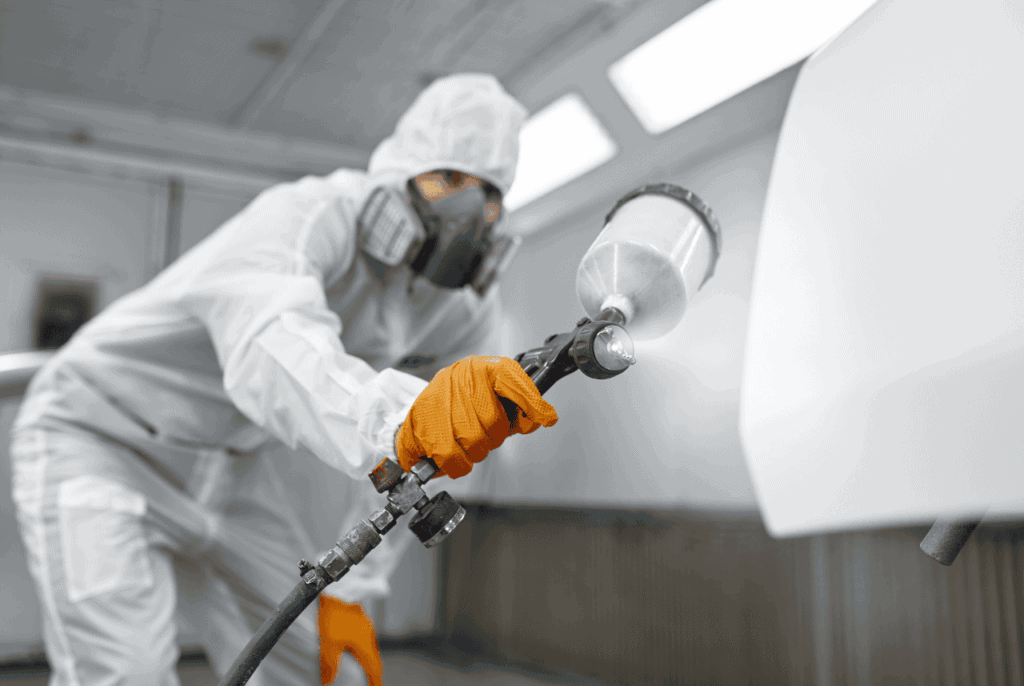
Spray application is the preferred method for applying industrial coatings where consistency, efficiency, and surface performance are critical.
Across sectors such as automotive manufacturing, aerospace, renewables, structural steel, and heavy engineering, coatings are typically applied to metal or composite substrates and are selected for protection as much as appearance.
Understanding the types of paint for spray applications is essential for achieving the required finish, adhesion, durability, and compliance. This blog outlines the most commonly sprayed industrial paint types, how they behave during application, and where each is best suited in demanding production environments.
Why paint selection matters in industrial spraying
In industrial environments, paint is rarely decorative alone. It is engineered to perform specific protective functions and must operate reliably over long service lives.
Industrial spray coatings are typically specified to:
- Protect steel and aluminium from corrosion and chemical exposure
- Improve wear resistance and mechanical durability
- Meet sector-specific performance and safety standards
- Prepare components for extreme operating environments
Choosing the wrong coating can result in poor adhesion, uneven film build, premature failure, extended downtime, and costly rework. Paint selection must always consider substrate material, operating conditions, application method, and curing requirements.
Solvent-based paints
Solvent-based coatings remain widely used in industrial spray applications due to their versatility and proven performance across a wide range of substrates.
Key characteristics:
- Strong adhesion to steel, aluminium, and composite materials
- Predictable atomisation and flow during air and airless spraying
- High resistance to moisture, chemicals, and abrasion
These coatings are commonly specified for structural steel, plant equipment, automotive components, and marine applications. Their consistent spray behaviour makes them well suited to large-scale industrial environments where controlled film build and repeatable results are critical.
However, solvent-based systems typically contain higher VOC levels. Effective ventilation, filtration, and appropriate PPE are essential to ensure safe application and regulatory compliance.
Water-based paints
Water-based industrial coatings are increasingly specified where environmental performance and reduced emissions are priorities.
Key characteristics:
- Lower VOC content compared to solvent-based systems
- Reduced odour and easier equipment clean-down
- Suitable for controlled spray booth environments
While modern water-based coatings can deliver excellent performance, they are more sensitive to ambient conditions. Temperature, humidity, and airflow play a significant role in drying and film formation, particularly when spraying metal substrates. Inconsistent environmental control can lead to extended cure times or surface defects, making process management essential in industrial facilities.
Acrylic coatings
Acrylic coatings are valued for their fast drying times, colour stability, and predictable application characteristics.
Key characteristics:
- Good corrosion resistance when used with appropriate primers
- Strong UV stability for external steelwork and fabricated components
- Consistent spray behaviour across a wide pressure range
Acrylics are commonly used on infrastructure projects, fabricated steel assemblies, and equipment housings where a balance of durability, appearance, and throughput is required. Their stable curing profile supports efficient production schedules in high-volume environments.
Enamel paints
Enamel coatings are specified where a hard, durable finish is required to withstand handling, cleaning, and mechanical wear.
Key characteristics:
- Smooth, high-quality surface finish
- Resistance to oils, fuels, and cleaning agents
- Suitable for machinery, plant equipment, and industrial components
Enamels typically require longer curing times than acrylic systems. This must be factored into production planning, particularly where coated components are handled or assembled shortly after application.
Epoxy coatings
Epoxy systems are widely used where maximum protection is required, particularly in harsh or corrosive environments.
Key characteristics:
- Excellent adhesion to steel and prepared metal surfaces
- High resistance to chemicals, abrasion, and moisture
- Commonly used as primers or intermediate coats
Epoxies are frequently specified for offshore structures, energy facilities, and heavy industrial plant. While extremely durable, most epoxy systems have limited UV resistance and are typically overcoated with a compatible topcoat for external exposure.
Polyurethane coatings
Polyurethane coatings are often used as a final topcoat in industrial spray systems.
Key characteristics:
- High resistance to weathering and UV exposure
- Flexible yet durable film structure
- Strong colour and gloss retention over long service periods
These coatings are commonly applied over epoxy primers to deliver long-term corrosion protection combined with a durable, easy-to-maintain surface finish on steel and aluminium structures.
Finish requirements in industrial spray applications
In industrial settings, finish selection is driven by function rather than aesthetics. Smooth or higher-gloss finishes can improve cleanability and inspection visibility, while lower-sheen finishes may reduce glare on large structures or equipment housings. Finish choice should support maintenance access, safety considerations, and long-term performance.
Choosing the right paint for the job
When selecting paint types for spray applications, industrial operators should consider:
- Substrate material – steel, aluminium, composites, or mixed surfaces
- Operating environment – indoor, outdoor, marine, or chemically aggressive conditions
- Required service life – short-term protection versus long-term durability
- Application method – air spray, airless, or specialist spray systems
- Coating system compatibility – primers, intermediate coats, and topcoats
Matching the coating system to both the substrate and spray equipment helps ensure consistent application, reliable curing, and long-term performance.
Supporting consistent spray results
Effective spray application depends on more than coating selection alone. Correct thinning, filtration, spray pressure, environmental control, and equipment maintenance all influence finish quality and coating performance.
At Airblast Limited, our team works with industrial operators to support safe, efficient spray application across steel, aluminium, and composite substrates. If you need guidance on spray equipment selection, process setup, or best-practice application, we’re here to help.